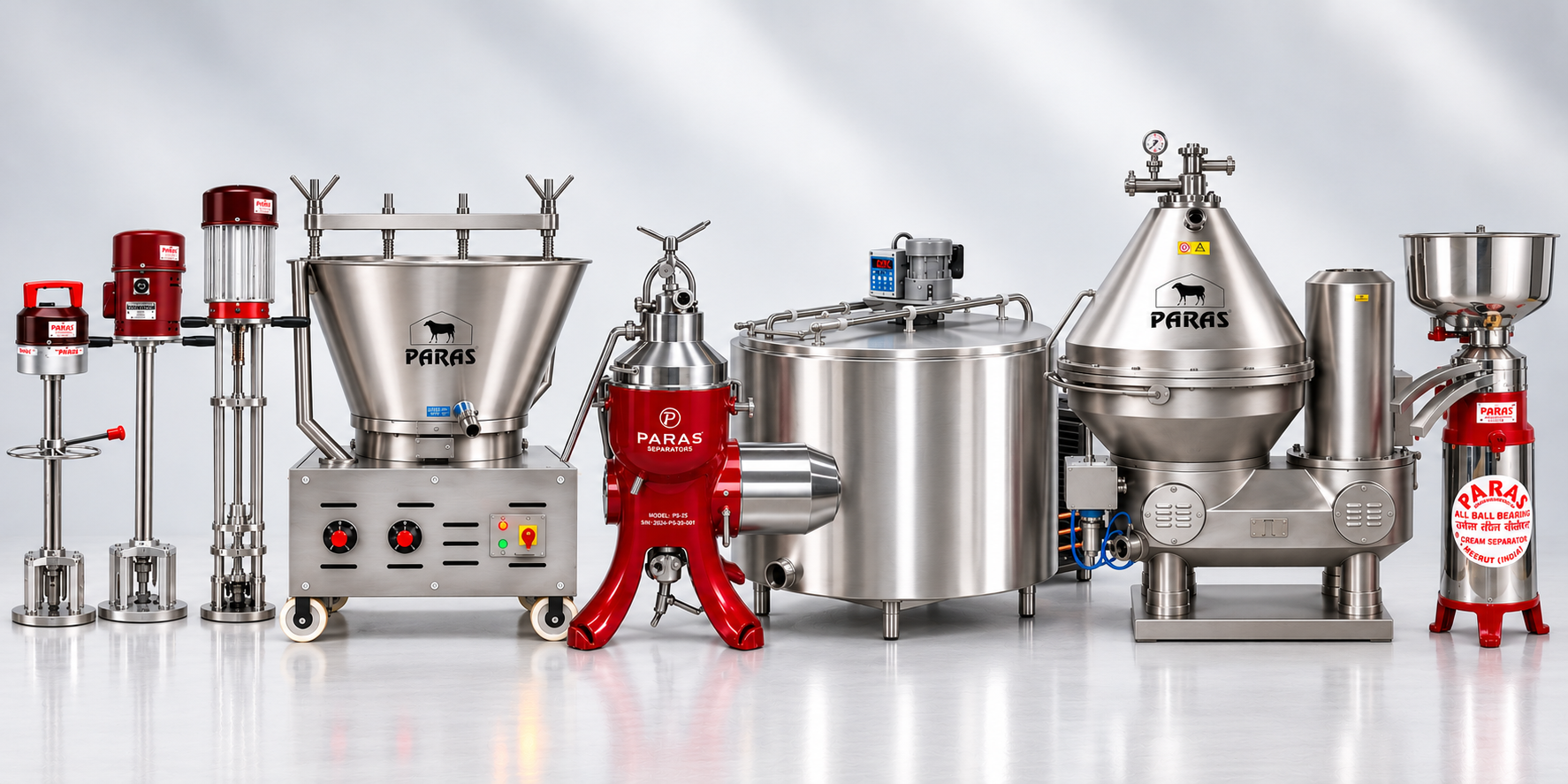
Starting a small dairy business in India can be a profitable opportunity when planned properly. Demand for milk, cream, paneer, curd, ghee, butter, khoya, and other dairy products remains strong across rural and urban markets. However, success depends on choosing the right equipment, maintaining hygiene, controlling quality, and planning capacity correctly.
A small dairy business can begin with milk collection and gradually expand into value-added products such as cream, butter, ghee, paneer, khoya, lassi, and buttermilk.
Types of dairy business models
1. Milk Collection Business
Collect milk from farmers and sell to dairies, shops, or processors.
2. Cream Production
Use a cream separator to separate cream from milk and sell cream or use it for ghee and butter.
3. Paneer Production
Use milk processing and pressing equipment to produce paneer for local markets.
4. Ghee Production
Use cream separation, butter churning, and heating processes to produce ghee.
5. Khoya Production
Use khoya machines or multipurpose boilers for sweets and dairy product manufacturing.
Essential equipment checklist
1. Cream Separator
Used to separate cream from milk. This is one of the most important machines for dairy businesses.
Suggested models:
- GR 7 or GR 8 for small dairies
- GR 9 or GR 11 for growing businesses
- GR 108 and above for commercial dairies
2. Milk Stirrer
Used for dairy liquid mixing, curd preparation, lassi, buttermilk, and churning applications.
3. Milk Analyzer
Used to check milk quality, fat, SNF, and other parameters.
4. Butter Churner
Used for butter and ghee-related production processes.
5. Khoya Machine
Used for khoya, sweets, and milk product manufacturing.
6. Paneer Press
Used to press paneer and improve consistency.
7. Bulk Milk Cooler
Used to cool and store milk safely in larger operations.
Suggested setup levels
Starter Dairy Setup
- small cream separator
- milk testing equipment
- milk cans
- milk stirrer
Growing Dairy Setup
- medium capacity cream separator
- milk analyzer
- butter churner
- paneer press
- khoya machine
Commercial Dairy Setup
- high-capacity cream separator
- bulk milk cooler
- milk analyzer
- paneer press
- khoya machine
- butter churner
- packaging support
Common mistakes new dairy entrepreneurs make
- buying machines without calculating milk volume
- ignoring hygiene and cleaning
- choosing low-quality equipment
- not planning spare parts
- depending only on one product
- ignoring milk testing
- underestimating electricity and labour needs
How to scale profitably
Start with milk handling and cream separation. Then add value-added products such as butter, ghee, paneer, khoya, lassi, and buttermilk. Value-added products usually provide better margins than raw milk alone.
Why choose PARAS®
PARAS® Dairy Machinery by G.R. Jain Industries has been manufacturing dairy equipment since 1962. The product portfolio includes cream separators, khoya machines, milk stirrers, butter churners, paneer presses, milk analyzers, bulk milk coolers, milk cans, and other dairy equipment.
Conclusion
A successful dairy business requires the right equipment, proper planning, hygiene, and gradual expansion. Instead of buying machines randomly, entrepreneurs should select equipment according to milk volume, product goals, and future growth.
CTA
Planning a dairy business? Contact the PARAS® technical team for equipment selection support.
FAQs
Which machine is most important for a small dairy business?
A cream separator is one of the most important machines for cream, butter, and ghee production.
What equipment is needed for paneer production?
Paneer production requires milk handling equipment and a paneer press.
What equipment is needed for ghee production?
Cream separator, butter churner, and heating equipment are commonly used.
Is milk testing equipment necessary?
Yes, milk testing helps maintain quality and buyer trust.
Can a small dairy business expand gradually?
Yes, it is better to start with essential equipment and add more machines as demand grows.