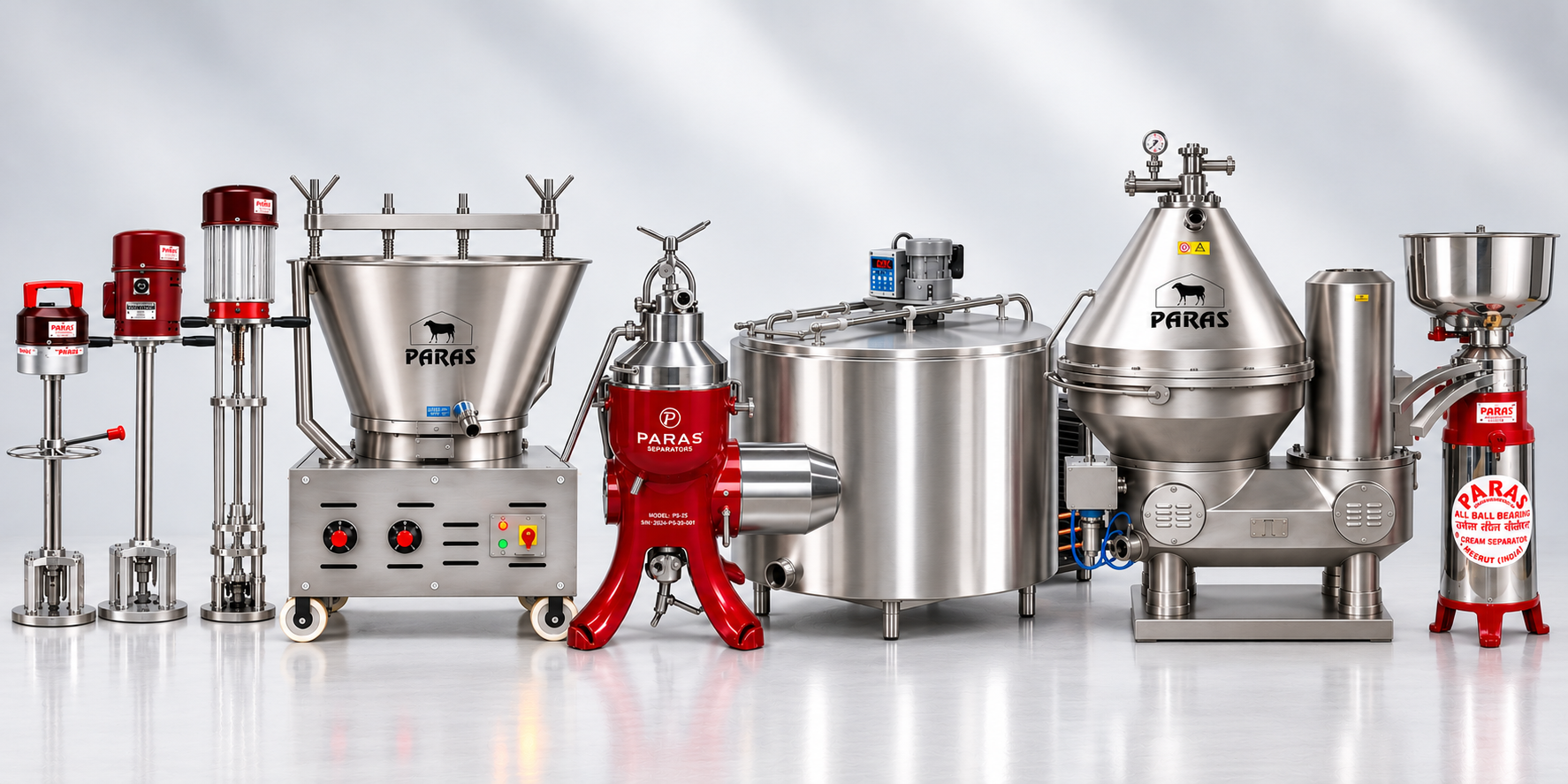
One of the most common questions buyers ask is whether they should choose a manual cream separator or an electric cream separator. The answer depends on milk volume, labour availability, electricity supply, budget, and daily operating requirements.
Manual cream separators are hand-operated machines. They are simple, reliable, and useful in areas where electricity is not available or unstable. They are commonly used by small dairy farmers, rural users, and low-volume milk processors.
Electric cream separators are motor-driven machines designed for faster, more consistent, and less labour-intensive operation. They are suitable for commercial dairies, milk collection centres, dairy entrepreneurs, sweet shops, and milk processing units.
Manual Cream Separator Advantages
- no electricity required
- simple operation
- useful in rural areas
- lower running cost
- easy to maintain
- suitable for small milk volumes
Manual Cream Separator Limitations
- requires physical effort
- slower than electric models
- not ideal for high-volume processing
- output depends on operator consistency
Electric Cream Separator Advantages
- faster processing
- consistent bowl speed
- reduced labour
- better for commercial use
- suitable for higher capacities
- ideal for daily dairy operations
Electric Cream Separator Limitations
- requires electricity
- higher initial cost
- needs proper voltage stability
- electrical maintenance may be required
Comparison Table
| Operation Type | Best Use |
|---|---|
| Manual Cream Separator | Best for small dairies, rural users, farms, and low-volume milk processing. |
| Electric Cream Separator | Best for commercial dairies, milk collection centres, sweet shops, and high-volume operations. |
PARAS® Manual Models
- GR 7 HO
- GR 8 HO
- GR 9 HO
- GR 11 HO
- GR 107 HO
- GR 108 HO
PARAS® Electric Models
- GR 7 AE
- GR 8 AE
- GR 9 AET/AED
- GR 11 AE
- GR 108 AE
- GR 109 AEP/AET
- GR A1, A2, A3
- 5000 LPH Auto-Cleaning Model
When to choose manual
Choose manual if your milk volume is low, electricity is unreliable, labour is available, and investment budget is limited.
When to choose electric
Choose electric if you process milk daily, require faster output, want labour saving, or operate a commercial dairy business.
Long-term view
Manual machines may save initial cost, but electric machines improve productivity and reduce daily effort. For growing businesses, electric models are often better in the long term.
Conclusion
Manual and electric cream separators both have their place. The best choice depends on your operation scale. Small dairy farmers may prefer manual models, while commercial users should choose electric models for speed, consistency, and growth.
CTA
Compare PARAS® manual and electric models or contact our team for machine selection support.
FAQs
Is manual cream separator good for small dairy?
Yes, manual models are suitable for small dairies and rural users.
Is electric cream separator better than manual?
Electric models are better for regular commercial use and higher output.
Which PARAS® models are available in manual?
GR 7, GR 8, GR 9, GR 11, GR 107, and GR 108 have manual variants.
Which model is better for commercial dairies?
Electric models such as GR 11, GR 108, GR 109, GR A1, GR A2, and GR A3 are better for commercial use.
Does electric cream separator need stable voltage?
Yes, stable voltage helps ensure proper performance and protects the motor.