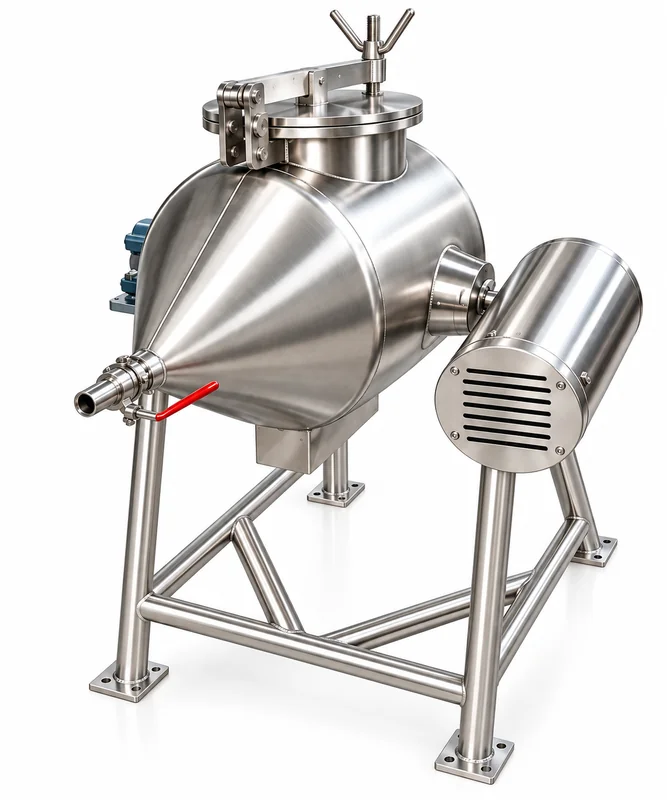
60L
Volumetric barrel capacity
- Cream loading
- 30 litres
- Geared motor
- ¼ HP
INDUSTRIAL DAIRY STANDARD • FOOD GRADE SS 304 BARREL • 36 RPM CONICAL DESIGN
The definitive choice for commercial dairy farms, regional butter brands, and industrial dairy plants. Engineered by G.R. Jain Industries with food-grade SS 304 conical barrels, heavy-duty geared motors, stainless steel frames, and precision sight glasses for rapid fat phase inversion, maximum butter yield, and flawless moisture control.
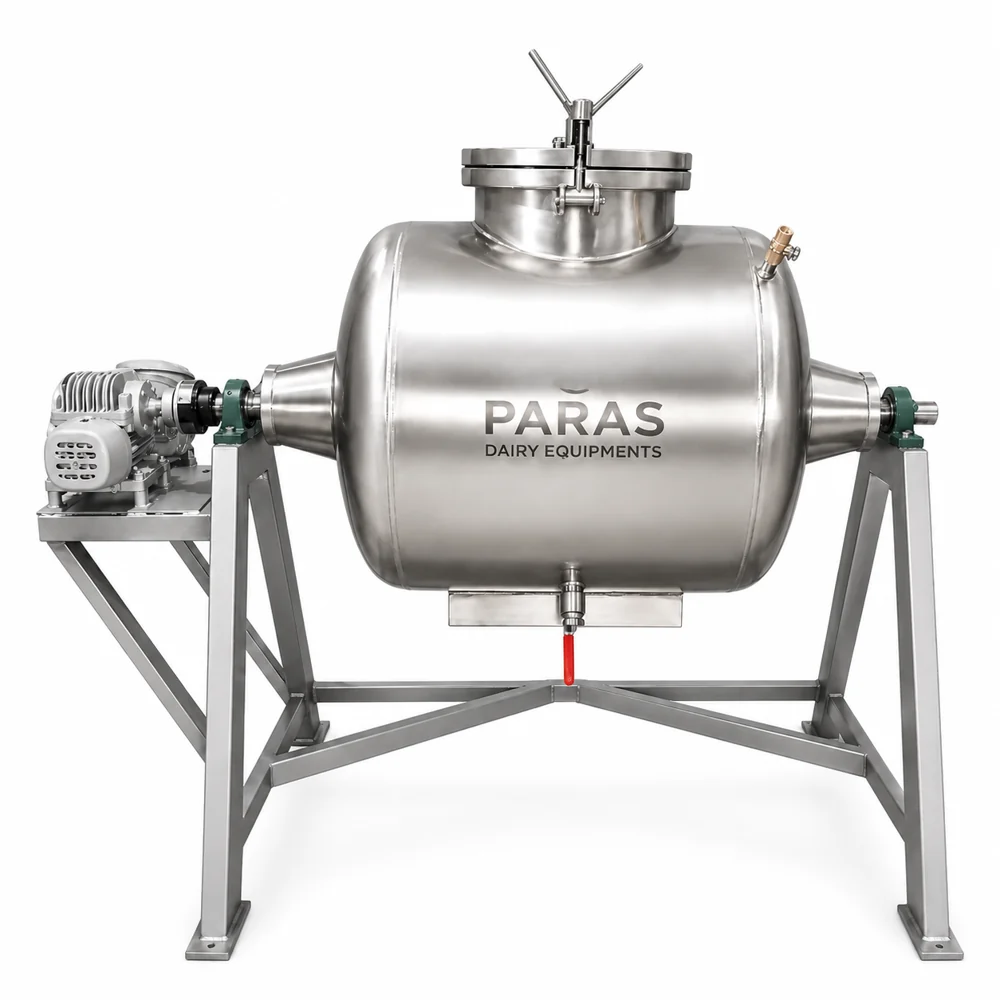
Volumetric barrel capacity
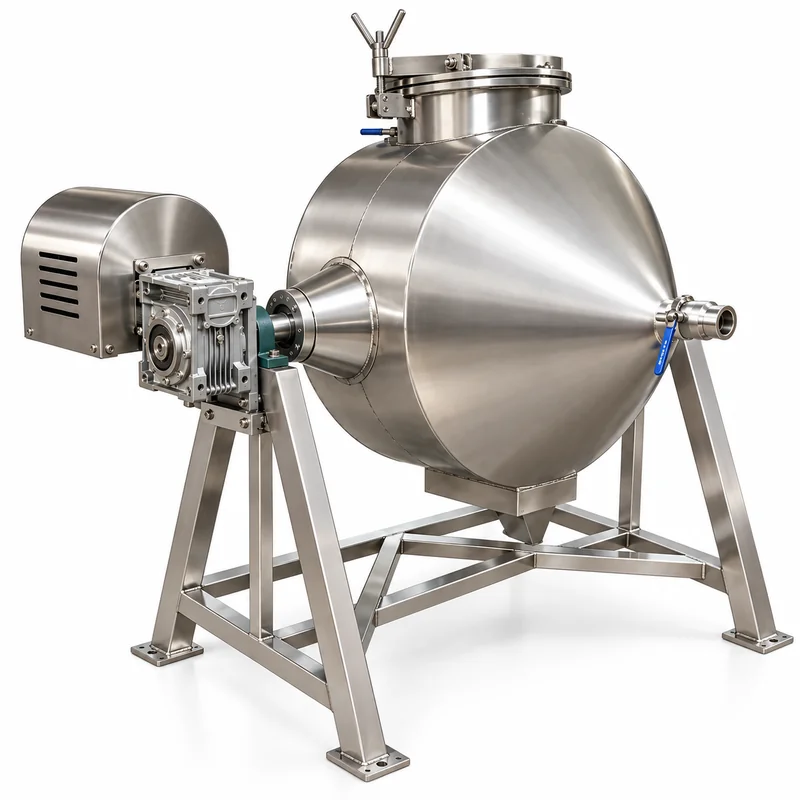
Volumetric barrel capacity
Volumetric barrel capacity
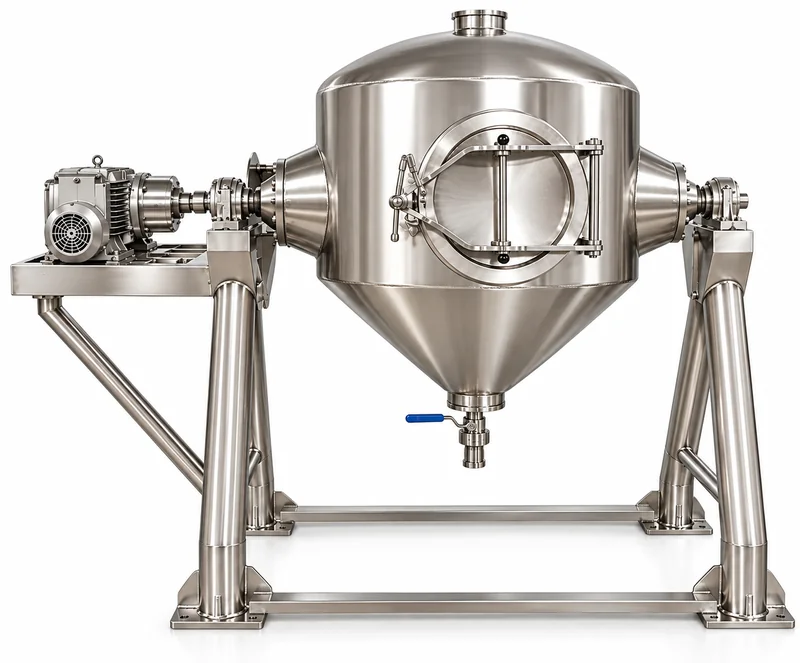
Volumetric barrel capacity
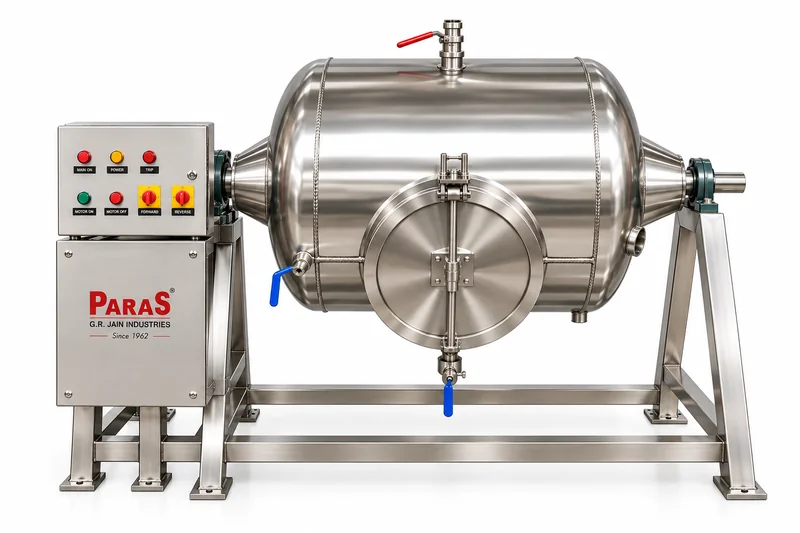
Volumetric barrel capacity
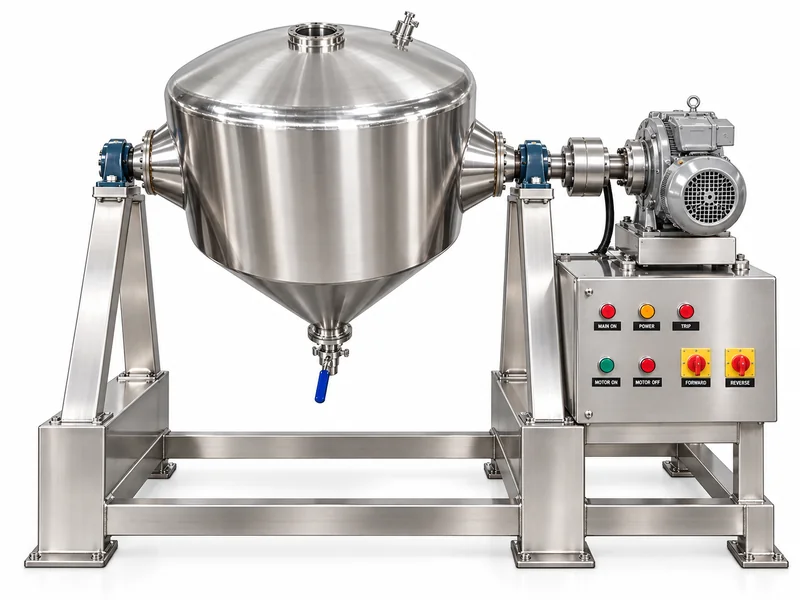
Volumetric barrel capacity
The PARAS® butter churner lineup spans from 60 LTR to 1000 LTR models, designed for batch-based butter production and cream churning. Review the complete technical specifications below:
| Barrel volume | Cream loading | Motor with gearbox | Power supply | Sight glass |
|---|---|---|---|---|
| 60 LTR | 30 LTR | ¼ HP | Single / 3 Phase | 50 mm |
| 100 LTR | 50 LTR | ½ HP | Single / 3 Phase | 50 mm |
| 200 LTR | 100 LTR | 1 HP | Single Phase | 50 mm |
| 300 LTR | 150 LTR | 1½ HP | Single / 3 Phase | 100 mm |
| 500 LTR | 250 LTR | 5 HP | Single / 3 Phase | 100 mm |
| 1000 LTR | 500 LTR | 7.5 HP | Single / 3 Phase | 150 mm |
We manufacture specialized drive architectures tailored to match your required product consistency and operational scale.
Transparent pricing from our Meerut manufacturing hub. Exact quotes vary based on vessel thickness, VFD panel additions, and motor horsepower.
| Vessel Capacity | Standard Material Construction | Indicative Domestic Price (INR) | Estimated Export Price (USD) |
|---|---|---|---|
| 60L – 100L | Food Grade SS 304 / Stainless Steel Frame | ₹42,000 – ₹66,000 | $516 – $816 |
| 200L – 300L | Heavy SS 304 / Geared Motor | ₹90,000 – ₹1,44,000 | $1,080 – $1,800 |
| 500L | Extra-Heavy SS 304 / 5 HP Motor | ₹1,80,000 – ₹3,00,000+ | $2,220 – $3,720+ |
| 1000L | Sanitary Plant-Scale SS 304 | Quote on Request | Quote on Request |
Under Indian tax regulations, commercial dairy processing machinery is strictly subject to an 18% GST rate. Registered commercial businesses and authorized dealers are fully eligible to claim Input Tax Credit (ITC) on their purchases.
Uncompromising build quality defines Paras Equipment. We do not use aluminum or mild steel (MS) for any food-contact parts.
Butter churning is a mechanical process known as "phase inversion", converting an oil-in-water emulsion (cream) into a water-in-oil emulsion (butter).
The PARAS® Butter Churner is a dairy processing machine used for churning cream and preparing butter in practical operations where reliability, hygiene, and correct capacity selection matter.
When evaluating Paras machinery against mass-market alternatives, engineering precision dictates your final product quality.
| Engineering Parameter | Cheap Local Manufacturers | Paras Butter Churners |
|---|---|---|
| Tank Material Gauge | Thin SS sheet (Dents and vibrates) | Food Grade SS 304 (Absorbs kinetic load) |
| Internal Seams | Rough spot-welds (Harbors bacteria) | TIG-welded & perfectly smooth |
| Drive Mechanism | Standard V-belts (Slips under load) | Direct-Coupled Heavy Gearbox |
| Viewing Window | Small or non-existent | Precision Sight Glass (50mm–150mm) |
| Speed Control | Single fixed high-speed | VFD variable speed available for kneading |
The financial return on a Paras commercial churner is driven by yield recovery and moisture control.
The Payback: By maximizing fat recovery and legally optimizing moisture weight, high-volume dairies recover the capital cost of a Paras machine within 3 to 4 months.
By purchasing directly from our manufacturing headquarters in Meerut, you bypass middleman markups and secure factory-level support.
Correct cleaning and preventive maintenance help protect product performance and reduce avoidable downtime.
G.R. Jain Industries provides direct manufacturer support, spare parts, and technical guidance. Buyers can contact the factory with the model name, capacity, application, city, country, and quantity required for accurate guidance.
Unlike cream separators, a butter churner does not separate milk fat from raw milk. It is used after cream is already available when you need a practical churning system for batch-based butter production.
Check the cream temperature, fat content, and loading quantity before increasing the speed. Cream that is too cold, low in fat, or loaded beyond the recommended cream capacity can take longer to churn. Use the cream-loading limit in the specification table rather than the full barrel volume, and follow the temperature and cream-preparation guidance for your model. Record these conditions across batches to identify the cause; extra churning time alone will not correct unsuitable cream.
PARAS churners support flexible electrical setups, offering both Single Phase and 3 Phase motor configurations across capacities ranging from 1/4 H.P. (60 LTR) up to 7.5 H.P. (1000 LTR).
This is called "whipping out." It happens for three reasons: 1) The cream is too warm (above 15°C); 2) You overfilled the churner, leaving no drop-space for kinetic impact; 3) The cream fat percentage is too low (below 30%).
A butter churner shifts massive amounts of weight violently as the solid butter forms. Ensure the unit is bolted securely to a leveled concrete floor or heavy anti-vibration rubber mounts.
Yes. We manufacture equipment for over 40 countries. We configure all electric motors to match your destination's exact grid standards (110V/60Hz, 220V/50Hz, or 3-Phase 380V/415V). The main drive is secured, and the entire unit is packed in heavy-duty, ISPM-15 certified fumigated wooden crating to prevent transit damage and comply with international customs regulations.
Washing helps remove residual buttermilk from the butter granules. After draining, follow your model’s instructions for washing with clean, cold water and working the butter at the appropriate setting. Drain the wash water thoroughly before the final working stage. Washing does not replace hygienic handling or refrigerated storage.
Butter yield depends on the cream’s fat percentage, the quantity loaded, and the finished butter’s moisture content. Barrel capacity is not the amount of butter produced. For a practical estimate, record the cream weight and fat percentage, then weigh the finished butter from a trial batch using your normal process. Compare batches at the same cream composition and final consistency rather than assuming a fixed yield from litres alone.